- prev
- next
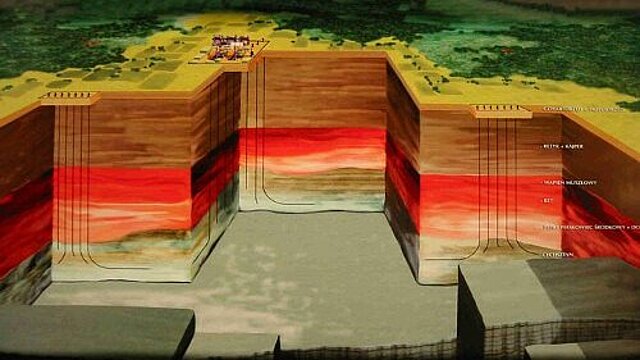
The development of CO2 storage methods are now a big concern. Several candidates such as depleted oil and gas reservoirs and coal seams, deep saline aquifers are considered as the most prospective structures like big capacity reservoirs.
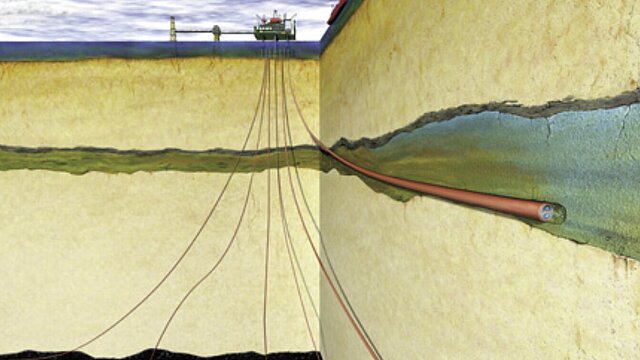
In this work, we will focus on finding optimal parameters such as pressure and volume flow during injection of supercritical CO2 into saline aquifers. The main physical phenomenon which prevents achieving high injection rates is salt precipitation. This effect can be esspetially prominent for shallow and low-permeability reservoirs. It can severely reduce the reservoir permeability around the well, induce excess pressure build-up, and cause a decline in injectivity.
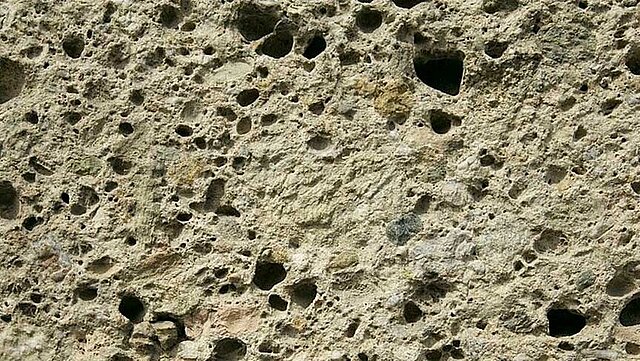
Injection of CO2 to rock formation can also have a negative impact on porosity and permeability of porous medium because grain displacement, compaction, and shrinkage-swelling and thermochemical processes such as precipitation of minerals and asphaltenes, and hydrate formation. In the research we will fill the gap in the knowledge about length (distance), magnitude, and velocity of capillary-driven backflow, viscous forces under different thermodynamic, continuity of water film conditions, the impact of salinity and salt type on the magnitude, distribution, and precipitation pattern, nucleation and growth crystals. As a result we would give an answer on how strong is an effect of CO2 injectivity to induced salt precipitation.
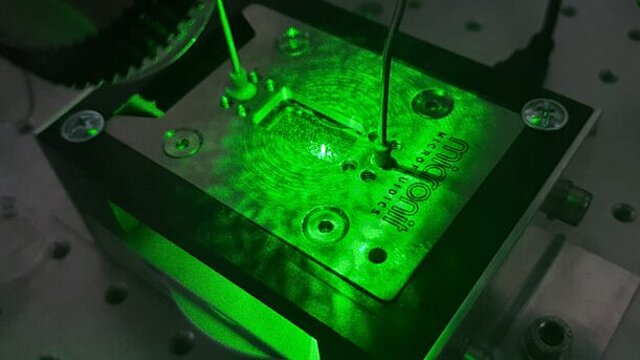
Studied of the interaction of CO2 and brine with various types of rocks under a wide range of pressures, temperatures as well as observation of flow through microchannels will be performed by an existing microfluidic system. Another microfluidic system utilizing Raman spectroscopy will be constructed. That new system will be used in order to analyze the kinematic and dynamic of the capillary behavior of the brine/CO2 system. It will also be able to distinguish between gaseous CO2 and soluble CO2 and as a result, we would be able to measure solubility, minimal miscibility pressure, bubble/dew point and determine phase equilibrium curve.